
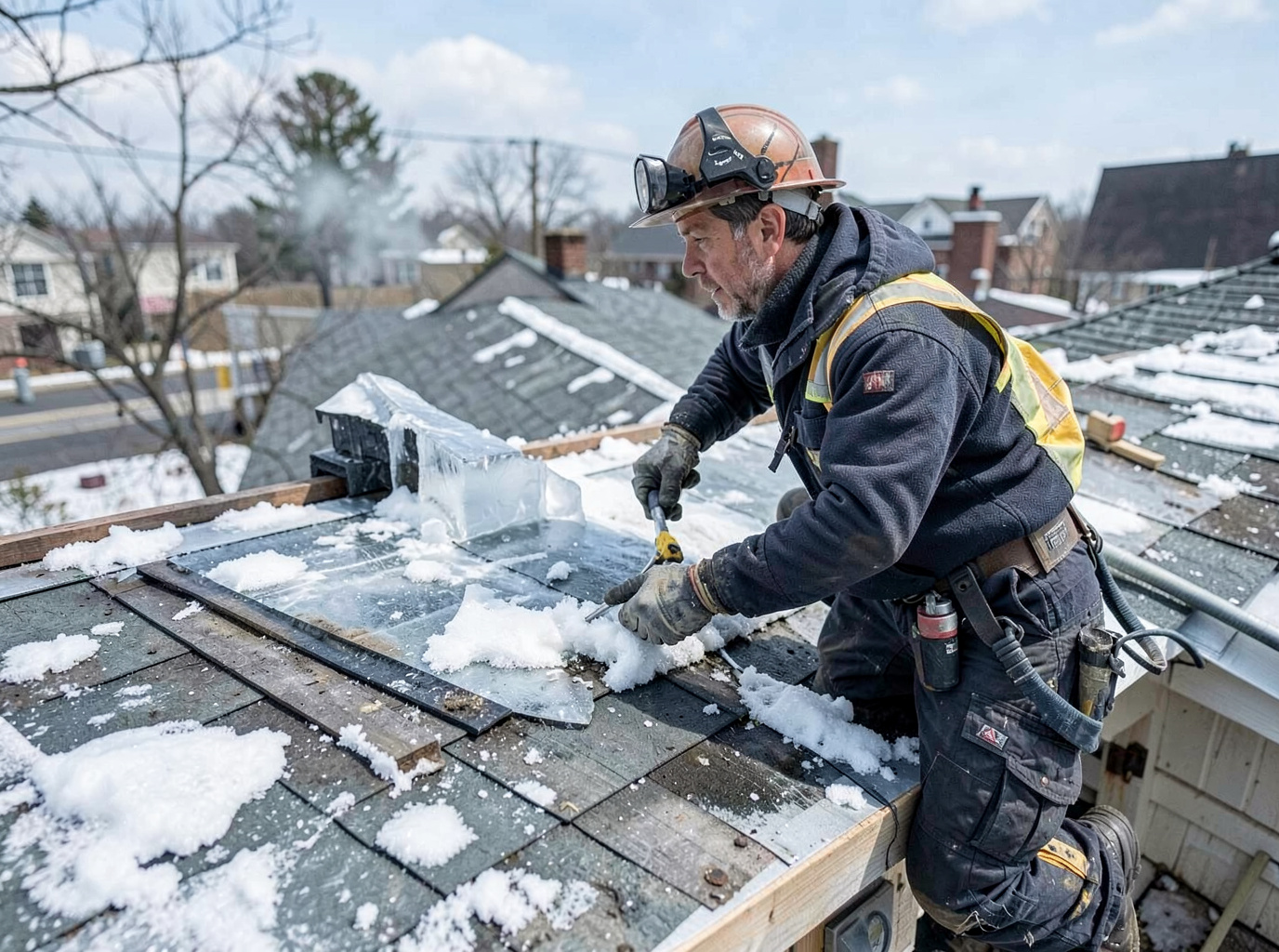
Springfield winters bring repeated freeze-thaw cycles that push melting snow under shingles on older homes common in Enos Park and near the Illinois State Capitol. Ice dams form along eaves when attic heat melts snow on the upper roof while the overhang stays below freezing. Water then finds its way past flashing and into attics or walls, especially on two-story homes built before 1960 that still have original asphalt shingles and minimal insulation.
We start every job by checking attic ventilation and insulation levels because adding heat cables without fixing the heat loss simply moves the dam farther up the roof. In neighborhoods like Oak Ridge or Laketown, many roofs slope toward north-facing eaves that stay shaded longer, so we often install self-regulating cables along gutters and valleys rather than full-roof coverage. Homeowners in nearby Chatham or Rochester sometimes ask about steam removal; we use it only when the ice is thin and the membrane underneath is intact.
After the ice is cleared we inspect for torn underlayment and damaged drip edge, then document everything with photos for insurance claims. Older homes around the Abraham Lincoln Presidential Library often have multiple layers of roofing, which can hide previous water paths and change how we seal the repairs. We never leave heat tape running unattended and always recommend a follow-up attic check once temperatures stabilize above freezing.
Technician insight
In Springfield the thing that catches most people out with Ice Dam Roof Repair is how quickly heat loss through old knob-and-tube wiring areas in Enos Park attics keeps the eaves just warm enough to melt snow while the gutter stays frozen solid.
North-facing eaves on a 1920s home in Laketown
Heavy snow followed by a week of single-digit nights created a six-foot ice dam that pushed water under the shingles. We found the attic insulation had settled in one corner near the original chimney chase. After removing the ice we added baffles and insulation, then ran heat cable along the gutter. No further leaks occurred through the rest of the winter.
Ice Dam Roof Repair Services We Offer
✓Ice Dam Removal
Physical removal of ice dams using steam or manual methods that avoid shingle damage on Springfield roofs.
✓Gutter Heating Cable Installation
Self-regulating heat cables installed along eaves and downspouts to prevent ice dam formation in Sangamon County winters.
✓Attic Heat Loss Inspection
Infrared scan and insulation assessment to locate warm spots that cause ice dams on homes in Oak Ridge and Downtown Springfield.
✓Flashing and Drip Edge Repair
Replacement of damaged flashing and drip edge that ice dams have forced water behind on older Laketown properties.
✓Emergency Leak Containment
Temporary interior tarping and exterior tarping to stop active water intrusion until permanent ice dam repairs are completed.
Ice Dam Roof Repair Cost in Springfield, IL
| Service | Typical Range | What Affects It |
|---|---|---|
| Initial Ice Dam Inspection | $150–$300 | Includes attic check; higher on two-story homes or steep pitches common in older Springfield neighborhoods. |
| Ice Dam Removal | $400–$900 | Varies with dam length and whether steam equipment is needed. |
| Gutter Heat Cable Installation | $8–$15 per linear foot | Self-regulating cable; price rises with complex valleys or multiple downspouts. |
| Flashing and Drip Edge Repair | $250–$650 | Depends on how many sections must be replaced after ice has lifted the original material. |
Ranges are typical for Springfield, IL and confirmed with an exact written quote before any work starts.
How it works
- 1
Site Assessment
We inspect the roof, attic, and gutters from both inside and out, noting ice locations, ventilation issues, and any existing damage on homes in Enos Park or near Oak Ridge Cemetery.
- 2
Ice Removal
Steam or careful manual methods clear the dam without tearing shingles, focusing on north-facing eaves that stay cold longest in Springfield winters.
- 3
Source Repair
We replace or reseal underlayment, flashing, and drip edge where water has penetrated, then install heat cable where heat loss is confirmed.
- 4
Final Check and Documentation
Photos and a written summary are provided so homeowners can review the work and submit to insurance if needed.
Pricing
Upfront quotes given after inspection; final price depends on roof access, ice thickness, and any hidden damage found.