
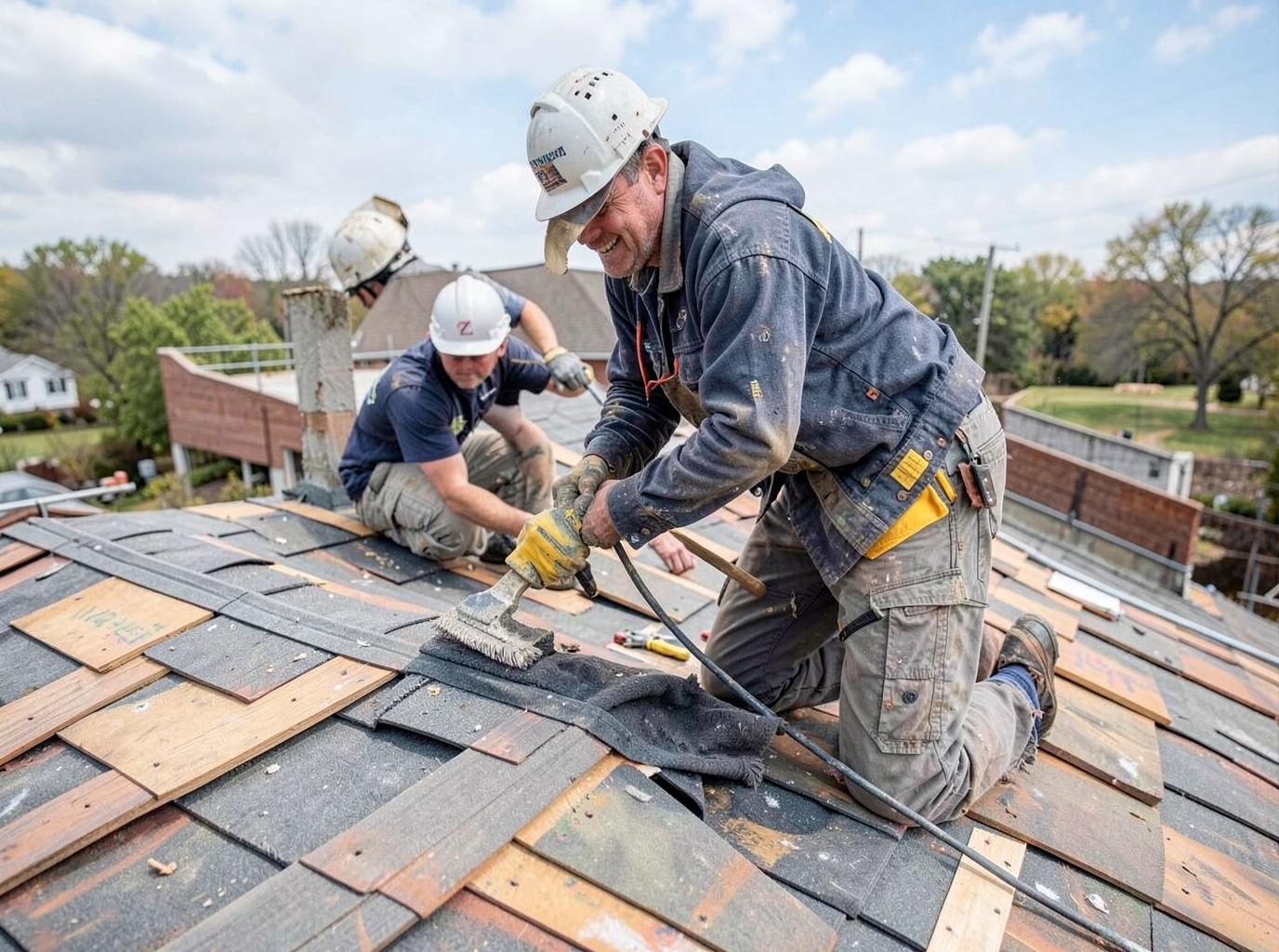
Taylorville sits south of Springfield along Route 29 in Christian County, where many homes date to the early 1900s and feature steep asphalt-shingle roofs that take a beating from humid continental swings. Cold winters bring ice dams along eaves while hot summers and occasional hail push granule loss and blistering. Our crew travels from the Springfield shop to handle these roofs on tree-lined streets and rural acreage alike, checking attic ventilation and underlayment before any tear-off begins.
Access matters on Taylorville lots that often back up to drainage ditches or sit near the lake. We stage materials on driveways or front lawns to avoid soft ground after rain, then work around existing chimneys and older fascia boards common on local stock. Same-day quotes cover both in-town blocks near the square and outlying properties toward Pana Road, keeping crews efficient between jobs in nearby Rochester and Auburn.
Winter calls start early here once temperatures drop and melt cycles repeat. We add extra ice-and-water shield along eaves and valleys on every Taylorville replacement, then double-check ridge vent flow to cut future dam risk. Homeowners on older blocks appreciate the straightforward schedule that fits around school drop-offs at Taylorville High School.
Around Taylorville, IL
We regularly work near:
- 📍Taylorville Lake
- 📍Christian County Courthouse
- 📍Manners Park
- 📍Taylorville High School
- 📍Downtown Taylorville Square
- 📍Central Park
Roofing Contractor in Taylorville, IL — Local Notes
- •Taylorville homes from the 1920s-1950s often have single-layer shingles over skip sheathing, requiring full deck inspection before new underlayment goes down.
- •Lots near Taylorville Lake and drainage ditches hold moisture longer after storms, so crews allow extra drying time before starting tear-offs.
- •Route 29 wind exposure plus winter ice loads make ridge-vent upgrades and extra flashing at valleys standard on most local replacements.
- •Rural properties outside town limits frequently have long gravel drives that limit truck access, so we stage bundles by hand or with smaller equipment.